
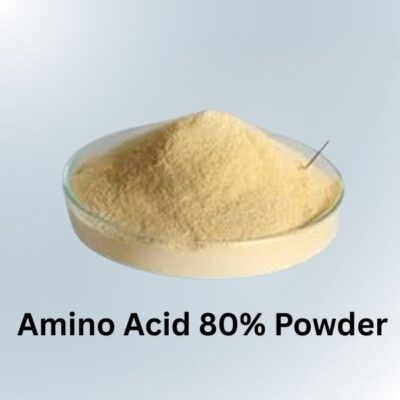
Amino Acid Powder
Amino acids are increasingly used in modern agrochemical formulations as bio stimulants-substances applied to plants or soil to enhance natural processes, such as nutrient uptake, stress tolerance, and crop quality. making the exogenous application of “ready-made” amino acids a critical tool for sustaining growth and productivity.
Mechanism of Action
Amino acids act as building blocks for proteins and enzymes, but as biostimulants, they function through several specific pathways:
- Energy Saving: By providing amino acids directly, the plant saves the significant energy required to synthesize them from nitrogen, carbon, and water, allowing the plant to use this energy for growth, flowering, and fruit development.
- Chelation (Micronutrient Uptake): Small amino acids, particularly glycine and glutamic acid, act as natural chelating agents. They form stable, small, electrically neutral, and highly mobile complexes with metal ions (Ca, Zn, Mg, Fe, Mn), facilitating rapid transport and absorption into plant tissues.
- Metabolic Precursors: Specific amino acids serve as precursors to essential plant hormones and metabolites:
- Tryptophan: Precursor to Indole Acetic Acid (IAA), a primary auxin promoting root growth and cell expansion.
- Methionine: Precursor to ethylene and polyamines.
- Glycine & Glutamic Acid: Essential for chlorophyll biosynthesis.
- Proline: Acts as a major osmoprotectant, stabilizing membranes and proteins under abiotic stress (drought, salinity).
- Stress Management: Amino acids help maintain turgor pressure and regulate metabolic responses during extreme conditions, preventing damage to cell structures
Major Roles in Agriculture
- Enhanced Photosynthesis: Glycine and Glutamic acid increase chlorophyll concentration, allowing plants to maximize light energy absorption, leading to greener, healthier crops.
- Improved Fruit Quality and Set: Amino acids (e.g., L-Proline, L-Lysine, L-Methionine) promote pollen germination and pollen tube elongation, leading to better fruit set and improved size, color, and sugar-acidity ratio (º Brix).
- Rapid Recovery from Stress: Foliar application helps crops recover faster from abiotic stresses like frost, drought, or chemical burns from pesticides.
- Rhizosphere Stimulation: They act as an energy source for soil microorganisms, boosting microbial activity that makes nutrients more available to plant roots.
Types and Production of Amino Acid Biostimulants
Amino acids used in agriculture are mainly produced via hydrolysis of protein-rich raw materials.
- Enzymatic Hydrolysis (Preferred): This process breaks down proteins while preserving the chirality of the molecules, resulting in L-amino acids (left-handed orientation), which are the only biologically active form directly usable by plants.
- Chemical Hydrolysis: This process often results in D-amino acids (right-handed), which are not active and can sometimes inhibit plant growth.
- Origin:
- Vegetal (Plant-based): Generally, sources like soybean or corn are used. They often contain higher concentrations of proline and glycine, offering excellent stress resistance.
- Animal-based: Derived from sources like collagen or keratin (leather by-products, fish).
Application Methods
- Foliar Spraying: The most common method, allowing for quick absorption through the leaf stomata and immediate metabolic response.
- Fertigation (Soil Application): Applied through irrigation systems to promote root development and improve soil structure.
- Seed Treatment: Improves germination rates and early seedling establishment


Reviews
There are no reviews yet.